Appearance
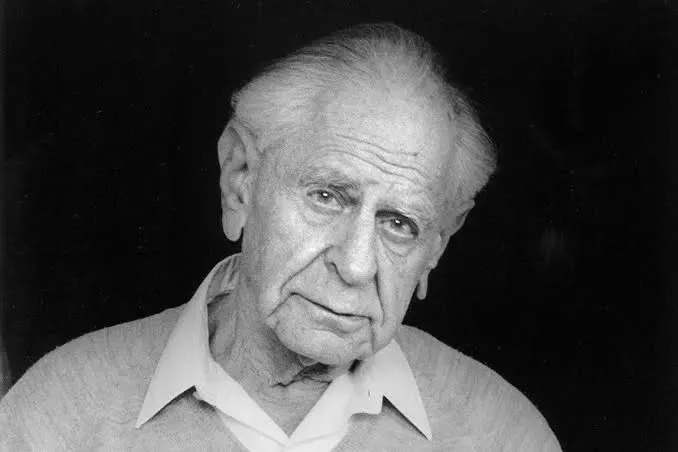
The Line Between Science and Pseudoscience: Understanding Popper's Falsification Principle
Every so often someone asks me, half-jokingly, whether what I do is "real science." It's a fair question, and it's the same one Karl Popper spent his life trying to answer. How do you tell the difference between a theory that's genuinely scientific and one that just sounds scientific? His answer has stuck with me ever since I first read it, so let me walk you through it.
Who was Karl Popper?
Sir Karl Popper (1902–1994) is, for my money, one of the most influential philosophers of science we've ever had. He grew up in Vienna in the last days of the Austro-Hungarian Empire: a city absolutely buzzing with ideas. Freud's psychoanalysis, the Vienna Circle's logical positivism, endless arguments about Marx and Einstein and the nature of knowledge itself. If you wanted to be confused by clever people, 1920s Vienna was the place to be.
What I love about Popper is that he wasn't a cloistered academic. He trained as a teacher, worked with troubled kids in Vienna's working-class districts alongside Alfred Adler, and watched totalitarian movements rise around him in the 1920s and '30s. Those experiences left him convinced that ideas have consequences: that telling good ideas from bad ones, especially in science and politics, really matters.
Fleeing the Nazis, he spent the war in New Zealand before landing at the London School of Economics, where he taught for decades. His big books (The Logic of Scientific Discovery (1934), The Open Society and Its Enemies (1945), and Conjectures and Refutations (1963)) made him a defender of both scientific rationality and political liberalism. He was knighted in 1965.
But his real legacy, I think, is one deceptively simple idea he worked out as a young man: falsification.
The problem that started it all
Picture Popper in 1919, surrounded by theories that all claimed to be scientific. Einstein's relativity sat right next to Marx's historical materialism, Freud's psychoanalysis, and Adler's psychology. They were all fascinating. But Popper noticed something that nagged at him: they weren't scientific in the same way.
It wasn't about which ones were true: he happily admitted science gets things wrong and pseudoscience sometimes stumbles onto truth. What bothered him was subtler. Freud, Adler, and Marx seemed to explain everything. No matter what happened, a believer could always find confirmation.
His time working with Adler drove this home. Once Popper described a case that didn't seem to fit Adler's theory of inferiority feelings at all. Adler analyzed it confidently anyway, without ever seeing the child. When Popper asked how he could be so sure, Adler said, "Because of my thousandfold experience." Popper's reply has stuck with me: "And with this new case, I suppose, your experience has become thousand-and-one-fold."
That's the whole problem in one line. Every observation got read through the theory, then chalked up as more proof. But proof of what? Only that a case could be interpreted that way, not that the theory was right. A man drowns a child? Repression. A man saves a child? Sublimation. The theory always fits, and a theory that always fits never risks anything.
Einstein's relativity played a completely different game. It made a genuinely risky bet: starlight would bend around the Sun by a specific, measurable amount. When Eddington's 1919 eclipse measurements matched, that meant something, because the observation could just as easily have proven Einstein wrong.
The falsification criterion
That contrast led Popper somewhere radical: a theory is scientific not because you can confirm it, but because you could falsify it.
A real scientific theory sticks its neck out. It forbids things. It makes predictions that, if they failed, would sink the whole idea. And the more a theory forbids, the better it is, because it's taking bigger risks and telling you more about the world.
A few of his core points:
- Confirmations are cheap. Go looking for supporting examples and you'll always find them.
- Only risky predictions count. A confirmation matters when the theory predicted something that could have gone the other way.
- Every good theory is a prohibition. It rules things out. A theory compatible with any outcome tells you nothing.
- Being unfalsifiable is a flaw, not a strength. If no possible observation could ever prove a theory wrong, it isn't science.
Why I keep coming back to this
This isn't just philosophy-seminar stuff. It's a practical filter, and I use it constantly.
Take astrology: Popper's favorite example. Astrologers pile up "confirming evidence": horoscopes that feel accurate, predictions that seem to land. But the predictions are vague enough to explain away any miss. The theory can't fail, which is exactly why it can never really succeed.
Or Marx's theory of history. Popper points out that some of Marx's early predictions were testable, and they were falsified. But instead of letting the theory go, his followers quietly reinterpreted both the theory and the evidence until they agreed again: a "conventionalist twist" that rescued the theory by stripping it of its scientific status.
A more generous reading
I should be fair to Popper here, because he wasn't a bomb-thrower. He never said unfalsifiable ideas are meaningless or worthless. Myths, metaphysics, even pseudoscience can hold real insight: he liked pointing out that plenty of scientific theories started life as myths, like Empedocles' early guess at evolution by trial and error.
The point isn't to sneer at everything non-scientific. It's to recognize that empirical science asks for a particular kind of courage: the willingness to be proven wrong. Theories that hide from refutation behind vagueness or after-the-fact patches might feel satisfying, but they don't actually push our understanding of the world forward.
Why it still matters
In a world arguing about vaccines, climate change, and AI, Popper hands us a simple set of questions to ask of any claim:
- What would count as evidence against it?
- Does it make specific, testable predictions?
- When the evidence turns hostile, do its defenders genuinely reconsider, or just tweak the theory to absorb the blow?
- Are the predictions vague enough to fit literally any outcome?
A theory that can explain anything explains nothing. Science doesn't move forward by collecting confirmations; it moves forward by surviving honest attempts to tear it down.
That's the part I find genuinely beautiful. The strength of science isn't its certainty: it's its vulnerability. The best theories are the ones brave enough to be wrong, and tough enough not to be.